Interview by Anne-Sophie Mongeau
First, could you tell us a bit about Sweet Justice and how you came to be an award winning studio for cinematics, trailers and game audio?
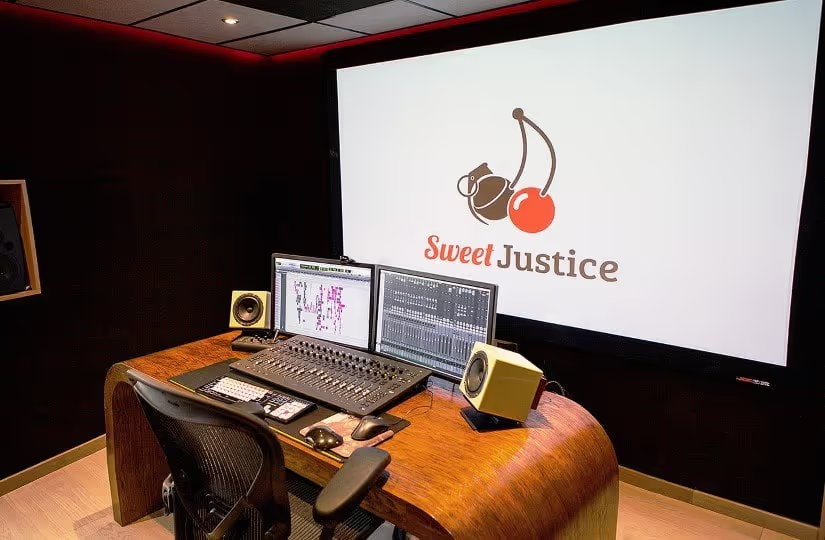
Samuel Justice: Sweet Justice started 2-3 years ago after myself and Chris Sweetman were introduced by our good mutual friend Ben Minto, Chris and I had dabbled with the idea of setting up a formal title for initially what was ourselves being contracted to various game studios to help them with audio design, whether it be for audio assets for a game or cinematics. Since then things have grown and grown exponentially and we’ve found ourselves being one of the go to companies in Europe for game audio services and a variety of other audio services. What started as just the two of us has grown into a core team of 6-8 folks, with a further small pool of talent we use, which allows us to scale up and down for projects as needed.
Can you describe what process you generally follow when starting a new cinematic or trailer project? Is there an established pipeline that takes you to a finished product or does it depend on the project?
SJ: We have an internal process “template” that we follow when speaking to clients for the first time, this allows us to make sure we get as much information as possible to help us understand the project from the get go. Every studio likes to work differently and in their own way and they need us to understand their workflow to every last detail.
Every studio likes to work differently and in their own way and they need us to understand their workflow to every last detail
A lot of the time initially is spent explaining how we work and being educated on how a particular studio works. We then adjust our pipeline to best suit the needs of the project/studio. This can be anything ranging from using DAW templates the studio are wanting us to use, creating temp audio to make sure we understand the style and tone, collaborative delivery methods (Dropbox, Box etc) or a studio being totally comfortable in allowing us to go away and use our own methods to create.
The most important part is fully understanding exactly what the client is after with the project and the sound they want to achieve. Understanding the title thoroughly and making sure all lines of communication are set early on. Not establishing these “rules” can make things much harder down the line.
If we’re focusing on game audio design and implementation, and the client is using an engine we’re not familiar with, then we will make sure to educate ourselves by any means necessary on how best the engine works, this usually requires onsite visits as well. There’s quite a rabbit hole involved in that process (is the audio implemented through an interface or through script? If an interface, then we need to learn the tool, if scripting, then what language etc etc).
You sometimes use licensed music in your work, can you identify some of the pros and cons?
SJ: It can be great fun working to a piece of music that you really feel can help push the work you’re doing forward, technically though there are always challenges. For example in Battlefield 1 – the intro cinematic was using the famous piece of music by Margo Bingham “Dream a little Dream of me”, we weren’t able to receive stems of the music for the cinematic in time before the piece had to be completed. We ended up using a fantastic tool called ADX TRAX PRO to strip the vocal and music separately from the master which allowed us far better control over the mix, especially considering the sound and visuals of the piece are meant to convey flowing in and out of reality. It allowed us to process the vocals and the music separately to support this. For the surround mix we were able to upmix the music whilst keeping the vocals right at the front, which again helped support the narrative of the piece by making it feel dreamier but also allowing the vocals to have the correct clarity needed.
https://www.youtube.com/watch?v=dg9g7vdudOM
Other cases we’ll receive stems for a piece, they can range anywhere from 7-8 tracks to over 40-50 tracks. That certainly helps the mix process, as it allows us to shape the music to help support the piece. Normally you’ll find the music was never written to be played in such a specific manner or on a specific piece, so it requires massaging to help it fit with everything else.
We have a lot of fun with clients when we’re approached to help them choose a piece of music for their work, as it requires us to be on the project from an early stage, you can really build up a rapport with a team at the point which helps bring out the best work in both parties.
What is the workflow regarding video editing? Is there back and forth between you and the video editors? Do they rely on audio for visual timing?
SJ: When asked we will help feedback on a video edit and help steer it in a direction that would make the audio stand out just as well as the visual components. There have been occasions where we’ve been asked to do scratch edits of sounds and then the video edit will actually be cut in sync to the sound created. There are other times when the video editors have a laser sharp focus on their edit and know exactly what they want to achieve, they will direct us on how they want the piece to sound (sometimes to a pinpoint). It really comes down to knowing the client, knowing the project/piece and knowing if us speaking up will help the edit, or if we’re just another cook in an already busy kitchen.
[tweet_box]How to create outstanding audio for cinematics – a Q&A with Samuel Justice[/tweet_box]
One of the ways your soundtracks stand out is how the emphasis seem to always be put at the right place at the right time. Do you have strategies when it comes to selecting which moments to emphasize on and how best to do it?
SJ: That really comes down to the mix process, Tim Nielsen wrote a FANTASTIC piece for Designing Sound a few years ago called “The Art of Economy”. It sums it up nicely – a lot of the focus is achieved by stripping back and muting unnecessary sound effects, taking away as much as possible to really get that laser focus on the specific moment.
A lot of the focus is achieved by stripping back and muting unnecessary sound effects
We’ll have a lot of back and forth with the client on what they want to portray at any given moment, what emotion they want the viewer/listener to feel and how the sound helps propel that story.
The end goal is to make sure that the client/teams vision is realised not only visually but through the use of sound as well, the mix process is the most important part of that step. You have to be prepared to “kill your darlings” to support the vision. No matter how great you think a design might sound, if it doesn’t work with the piece, it has to go.
What are you main mixing strategies and tools?
SJ: It all depends on the project, we run PT HD rigs but we also use Nuendo and Reaper, so it varies project to project. Making sure the mix translates onto a variety of listening setups (phones, laptops, tv’s etc) is very important these days so we’ll make sure to focus on that at one point during the mix process. Understanding the technology that the pieces are being played back on is also important – as all game engines will playback the audio through their own systems which contain built in DACs (digital-to-analog converter). Audio teams will also master the entire output of the title which normally involves at least some EQ and some of compression/brick wall limiting, making sure we’re aware of these and understanding how our work will sound through a mastering setup that we might not have directly to hand for reference is very important.
On a more practical basis, can you tell us more about the workflow of working as an outsourcer for game studios? What kind of relationship do you have with the studio and how do communications work?
SJ: Project discussions usually begin very early on, there’s been a few projects that we’ve been in talks with developers 2-3 years prior for us getting pulled in – that’s where we’ll establish the best lines of communication and expectations around communication. We do make sure we’re available to the client 24/7, at the very least via email/skype/slack – the nature of the business and how tumultuous projects can be requires us to be accessible at any given moment.
If it’s a trailer then normally the video editor is the first point of contact, for game cinematics then it’s usually the game director and audio director (or a member in the sound department who is very much entrenched and knowledgeable about all things making sound in the project) who we speak to the most. For projects where we’re directly working with a title (game audio implementation etc) then we’ll likely have a multitude of contacts that we need to keep in touch with throughout. The mindset you need to establish is that you are an extension of their audio team, the client needs to be able to reach out and talk to you in a language and tone that they would with any other member on the team, expressing what they like and don’t like about the work in a way they feel most comfortable.
Feedback is valued massively and is very key to us evolving
Learn from the client and the studio as much as you can, it’s the best way for us to grow as sound designers and individuals, feedback is valued massively and is very key to us evolving, it keeps you pushing and striving to do your best work possible.
One very important mindset is to lose any ego, any tiny tidbit of it – flush it away! If you have an ego you just won’t last long. When you’re in a creative discussion with a team they don’t want to hear about how “great” your work is or how many awards you’ve won – they want you to deliver. If they’ve hired you then that is a huge sign of confidence – as soon as you open that door and start that working relationship, make sure the ego is left outside in the rain.
When working on in game cinematics and cutscenes, how do you make sure to remain coherent with gameplay audio and provide seamless transitions in terms of mix, assets and aesthetics?
SJ: This is extremely important, for in game cinematics there are two kinds of pieces – Pre-Rendered cinematics (these are cinematics that are usually outsourced to an external video production house, and visually look quite different from the game itself). Then you have the in game cutscenes – these can also be offline (pre rendered in the game engine so they are not playing at runtime) but are visually built from game assets and look exactly like the game.
With Pre-rendered cinematics it’s very important that the mix of the piece is cohesive levels wise with the game, so the user doesn’t have to turn their playback system up or down when listening back, but creatively you are allowed to go a bit further and perhaps try stuff that wouldn’t necessarily work from an “in game cutscene” perspective. How far we can go with this depends on discussions with the team and the audio department.
The in game cutscenes require the flow of game -> cutscene -> game to be a seamless as possible, we are normally allowed a lot of creative freedom to craft the audio, but the key is that it feels wholly consistent with the game itself. If it doesn’t flow and feel right, then the listener will get pulled out of that experience and we will have sucked at our job :-), it is imperative to learn as much as you can about the project.